


Fantasy AI: RP & Companions
4.6458.00 Reviews
App Specs
- Version
- 2.5.3
- Updated On
- License
- Free
- Downloads
- 100,000+
- Developer
- LYRASOFT
- Categories
- Entertainment
- Platform
- Android
Screenshots

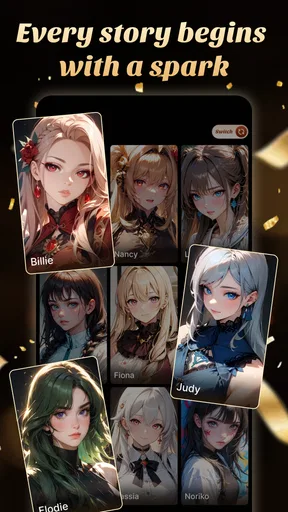
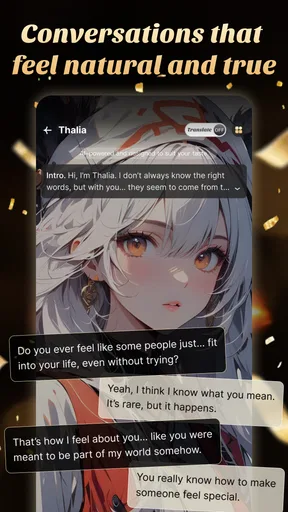
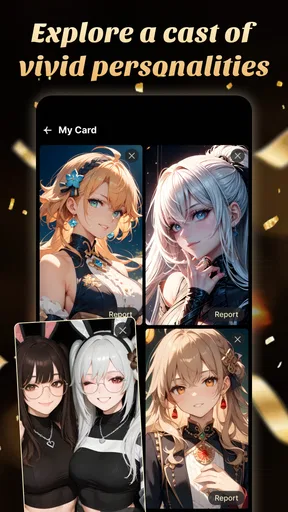
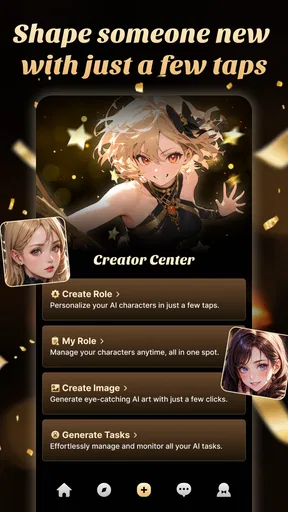

 Analysis by AppCompare
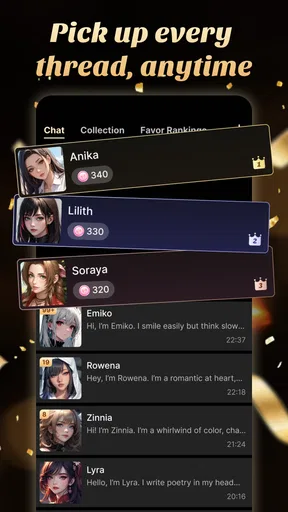
Fantasy AI: RP & Companions is the kind of entertainment app that can feel surprisingly absorbing during the first few sessions. It combines AI roleplay chat with AI art, giving me a way to create fictional companions and build settings around them instead of simply scrolling through finished content. The appeal is personal: I can decide the tone, relationship, and direction of an interaction, then return to it when I want a quieter form of entertainment.
After spending time with it, my view is mixed in a useful way. The app has a strong opening because it turns imagination into something interactive, but its lasting value depends on whether I enjoy maintaining an ongoing fictional world. It is not a replacement for a conventional messaging app, a story-driven game, or a social platform. It sits somewhere between those experiences, with the quality of the conversation and the effort I put into shaping it determining whether it remains interesting.
What the first week feels like
The first-week appeal comes from the low barrier to experimentation. I can approach the app with a simple idea rather than a fully developed story: a mysterious companion, a fantasy guide, a rival, or a character who belongs in a world I have only partly imagined. That makes the initial experience more inviting than a traditional roleplaying game, where I may need to learn rules, controls, maps, and objectives before the story becomes enjoyable.
The chat format also gives the experience a personal rhythm. Instead of watching a character follow a fixed script, I can respond in my own words and see how the scene develops. This is especially appealing when I want entertainment that reacts to me rather than asking me to follow a predetermined route. The creative freedom is the main reason I would recommend trying it, particularly to readers who enjoy writing prompts, character-building, fantasy fiction, or improvisational storytelling.
The art side adds another layer to that early excitement. A conversation can remain abstract, or I can use the visual direction to make a companion or setting feel more concrete. That combination helps the app stand apart from a plain chatbot. The image is not automatically the whole experience, but it can give a continuing roleplay a recognizable identity and make it easier to remember where a particular story left off.
My advice during the first session is to start with a narrow concept. Rather than asking for an enormous universe with dozens of characters, I would define one companion, one immediate situation, and one reason for the conversation to continue. A focused setup gives the interaction somewhere to go. It also makes it easier to notice whether the app’s style suits me, instead of confusing a weak premise with a weak app.
Another useful approach is to treat the first few chats as testing rather than a commitment. I would try a relaxed conversation, a more dramatic scene, and a practical creative task such as developing a setting or visual concept. Those different uses reveal whether I prefer the app as a companion experience, a writing aid, or an entertainment toy. Someone who only enjoys one of those modes may find the app more limited than the store summary initially suggests.
Worth Reading Before You Choose

Flipboard Shows What News Apps Must Do Beyond the Feed

Switching to Android Auto Means Rethinking Your Driving Routine

Google Calendar Makes a Crowded Week Easier to Manage

Ludo King Makes the Most of the Minutes Between Plans

Baby Panda World Brings Quick Play to Modern Phones, but Its Game Library Feels Busy

ESPN’s Live Game View Makes Following Close Games Easier
The mature age rating matters from the beginning. This is not an app I would casually hand to a child or install on a family tablet without considering who may use it. Adults should also remember that an AI roleplay environment can become emotionally absorbing because it responds directly and is always ready to continue a scene. I found the best experience came from treating it as fictional entertainment, not as a substitute for real relationships or professional support.
Where the novelty is strongest
The strongest early use case is private creative play. I can explore a character without worrying about an audience, revise the direction of a scene, and use visual prompts to make the imagined world easier to picture. That makes it more flexible than reading a fantasy novel, although less polished than a carefully edited novel. It also feels more active than watching a show because my replies influence the next moment.
For a reader who regularly gets ideas but rarely develops them, the app can function as a prompt partner. I might begin with a single character trait and use the conversation to discover conflicts, locations, or relationships. The important distinction is that the app provides momentum, not guaranteed literary quality. I still need to guide the exchange, reject unhelpful turns, and decide which ideas are worth keeping.
It can also fit a short evening break. If I have only a few minutes, I can continue a scene without the preparation required by a console game or tabletop session. That convenience is a genuine strength, but it can also encourage unplanned time use. The same frictionless access that makes the app easy to open makes it easy to continue longer than intended.
Whether it earns a place after the first month
The more difficult question is what happens after the opening period. AI roleplay is naturally good at generating beginnings: a meeting, a secret, a quest, or a dramatic reveal. Long-term value depends on what happens after those beginnings. If I return only to ask for another exciting introduction, the experience can start to feel repetitive. If I maintain a small number of companions and give each one a clear purpose, the app has a better chance of becoming a recurring hobby.
I found that continuity is more rewarding when I leave each session with a simple thread to pick up later. That might be an unresolved decision, a destination, or a question the companion has raised. This is a more reliable habit than expecting the app to create a complete story automatically. The user’s preparation becomes part of the entertainment, which is both the app’s creative strength and one of its demands.
A practical monthly routine would be to keep one main roleplay for immersive storytelling and use separate experiments for unusual ideas. Mixing every concept into one ongoing world can make the experience feel disorganized. Separating them helps preserve the identity of a favorite companion and makes it easier to notice which scenarios actually hold my attention. This is one of the less obvious trade-offs: more freedom is useful, but too much unstructured freedom can weaken continuity.
The art feature can support that routine when I use it as a visual checkpoint rather than a constant novelty generator. A recurring character becomes easier to imagine when the visual direction remains consistent, while random changes may make the companion feel like a collection of unrelated versions. I would therefore decide what visual qualities matter before creating several images. This saves creative energy and makes the results more useful for an ongoing story.
There is also value for people who like low-pressure writing practice. I can test dialogue, explore how a character reacts under stress, or compare different choices in the same fictional situation. However, I would not rely on every generated response as a polished draft. The app is better at helping me produce possibilities than at replacing editing. Anyone seeking precise prose, dependable research, or a finished manuscript would be better served by a dedicated writing tool.
Who is likely to keep using it
The best long-term audience is made up of adults who enjoy fantasy, character interaction, and open-ended creative projects. It suits people who like returning to a fictional setting and gradually adding detail. It may also work for someone who wants a private way to explore story ideas without organizing a group or learning a complex game system.
It is less suitable for people who need clear objectives and measurable progress. A conventional roleplaying game offers quests, rules, challenge, and a designed sense of advancement. Fantasy AI: RP & Companions offers a looser experience, so I may need to supply the structure myself. Readers who lose interest when there is no obvious goal should not expect the app to provide the same motivation as a campaign-based game.
It is also not the right choice for someone mainly looking for real social contact. Even an engaging AI companion remains a generated fictional interaction. If my priority is conversation with friends, community discussion, or spontaneous human humor, a messaging or social app is a better fit. The private, responsive nature of this app is its appeal, but it is also the boundary that defines it.
The maintenance cost behind the convenience
One of the most important long-term considerations is maintenance. The app is easy to begin using, but a satisfying ongoing experience requires some housekeeping from me. I need to remember what matters in a story, steer conversations when they drift, and decide which characters deserve continued attention. Without that effort, a companion can lose its personality or a world can become a sequence of disconnected scenes.
I would keep a short personal note outside the app for any roleplay I genuinely want to preserve: the companion’s central motivation, important relationships, unresolved questions, and the current situation. This is not a glamorous feature, but it is an effective workflow. It reduces the need to reconstruct the story from memory and gives me a quick way to restart after a break. It also protects the experience from becoming dependent on one perfect conversation.
Another maintenance issue is expectation management. AI responses can be imaginative one moment and awkward the next. I may need to restate a detail, correct a contradiction, or redirect a scene that has become too generic. That is normal friction for this type of app, but it changes the experience from passive entertainment into collaborative improvisation. If I want a story that never loses track of its own rules, a scripted game or edited book will usually be less demanding.
The free entry point makes trying the app straightforward, but optional purchases range from $3.49 to $59.99 per item. I would approach those purchases carefully and first decide whether I have developed a repeatable habit. Paying to extend an experience that I opened twice would not make sense to me. The better test is whether I am returning for a specific creative purpose rather than chasing the initial excitement.
Because the app is free to install, it can be tempting to treat every new idea as worth exploring. In practice, too many abandoned companions create clutter in my attention. I get more value by choosing a small cast and allowing the rest to remain experiments. This is a useful distinction between collecting possibilities and building a lasting experience: the former feels productive at first, while the latter requires selection.
What may cause fatigue
The first source of fatigue is repetition. Fantasy settings often rely on familiar ingredients, and an AI can return to broad patterns unless I give it specific direction. A vague request may produce a pleasant scene, but several similar scenes can blur together. I get better results when I introduce a concrete conflict, an unusual constraint, or a personal question for the character to answer.
The second source is emotional sameness. A companion that is endlessly agreeable may be comfortable but not very interesting. I would define boundaries, disagreements, and independent goals early, while still keeping the interaction within a tone I enjoy. Tension gives a roleplay somewhere to move, and it prevents every exchange from becoming simple reassurance. The trade-off is that stronger characterization can also make an interaction less relaxing.
The third source is visual inconsistency. AI art can make an idea vivid, but repeated generations may not produce the exact continuity I imagine. If I expect a character to look identical in every image, disappointment is possible. I see the art feature as a way to explore atmosphere and interpretation rather than a guaranteed production pipeline for a perfectly consistent illustrated series.
There is also the fatigue of deciding what to do next. Open-ended entertainment sounds liberating, but it can become work when every scene needs a new prompt. I would alternate between planned story moments and casual conversations so that the app does not feel like a writing assignment. If even that light planning feels tiring, a more structured game would probably deliver better recurring value.
Finally, the novelty of an always-available companion can fade if I use it only as a distraction. I get more from the app when I give sessions a purpose: developing a character, testing a scene, relaxing with a familiar fictional voice, or creating a visual idea. Without that purpose, the interaction can become a loop of opening the app, exchanging a few predictable messages, and leaving without feeling that the time added much.
My long-term verdict
Fantasy AI: RP & Companions earns a place on my device when I treat it as an imaginative activity rather than an automatic source of endless entertainment. Its combination of roleplay chat, companion creation, world-building, and art gives it more range than a standard chatbot. The app is particularly appealing during the first week, when the freedom to invent a character and immediately interact with it feels fresh.
Its lasting value is more selective. I would keep using it if I had a favorite companion, a developing setting, or a clear creative routine. I would probably move on if I wanted constant surprise without supplying direction, polished storytelling without editing, or genuine human connection. Those are not small distinctions; they determine whether the app feels like a personal creative space or a short-lived novelty.
LYRASOFT has positioned this as an entertainment app for mature users, and that framing fits my experience. It is free, supports devices running Android 7.0 or later, and currently appears as version 2.5.3. Its average rating is 4.6 from around 5.7 thousand ratings, with more than 100 thousand installs, which suggests that the concept has found an audience without making the app universally suited to everyone.
I would recommend trying it to an adult fantasy fan who enjoys improvisation and is willing to guide an ongoing story. Before spending on optional items, I would use the free experience long enough to answer one practical question: do I return because I have something meaningful to continue, or only because the app is easy to open? If the answer is the first, it can become a distinctive part of a creative routine. If the answer is the second, a conventional game, a novel, or a social app may offer more dependable long-term satisfaction.
My final recommendation is cautious but positive: this is a good app for people who want to build their own fantasy entertainment, not a universal replacement for every other kind of entertainment. Its strongest feature is the freedom to shape companions and worlds around personal interests. Its biggest weakness is that the same freedom places responsibility on the user. When I accept that trade-off, the experience has real staying power; when I do not, the initial magic fades quickly.
Pros
- Wide range of fantasy characters and roleplay scenarios
- Conversational replies help maintain an immersive story flow
- Useful for creative writing prompts and character ideas
- Simple interface makes starting a chat quick
- Character interactions can be personalized to fit your preferences
Cons
- Some features or conversations may require a paid subscription
- AI responses can occasionally feel repetitive or inconsistent
- Romance and mature themes may not suit younger users
- Requires an internet connection for most conversations
- Privacy policies should be reviewed before sharing personal details
FAQs for Fantasy AI: RP & Companions
What is Fantasy AI: RP & Companions?
Fantasy AI: RP & Companions is an interactive role-playing and AI chat app designed for users who enjoy conversations with virtual characters. You can explore fictional scenarios, create or select different personalities, and guide chats through your own messages. The experience is focused on storytelling, companionship, improvisation, and character-based interaction rather than traditional multiplayer gaming.
How does the role-playing experience work in Fantasy AI?
After choosing a character or scenario, you begin a conversation by sending messages and responding to the AI’s replies. The character follows the context of the conversation and adapts its tone to the selected role-play setting. Results can vary depending on your prompts, so detailed instructions and clear descriptions usually help create more consistent stories and more engaging interactions.
Is Fantasy AI: RP & Companions free to download and use?
The app may be available to download without an upfront purchase, but some features, characters, conversation limits, or premium capabilities can require in-app purchases or a subscription. Availability and pricing may differ between Android and iOS and can change over time. Before starting a long chat, review the current store listing and the app’s subscription terms.
Does Fantasy AI contain mature or sensitive content?
Because the app centers on fictional characters, open-ended conversations, and role-playing, some chats may involve mature themes, romance, emotional subjects, or other content that is not suitable for children. The exact experience can depend on the character and prompts you choose. Users should check the age rating, content guidelines, and parental controls before allowing younger people to use the app.
What privacy considerations should I know before using the app?
Conversations with an AI companion may be processed and stored according to the developer’s privacy policy, and the app can request permissions or collect technical and usage information to operate its services. Avoid sharing passwords, financial details, precise personal information, or anything confidential in chats. Read the current privacy policy and account settings to understand data retention, personalization, and deletion options.


